The Early History
The Royal Canadian Army Cadets (RCAC) can trace back their history to the creation of Drill
Associations in 1861, predating confederation by 6 years. Great Britain
had also formed cadets in 1860. These
associations were linked to local schools. The American Civil War and
the threat of the Fenian Raids motivated their creation in Upper and
Lower Canada. These early
cadet units, called drill associations, mark the beginning of the
Canadian Cadet Movement, one of the country's oldest youth programs.
Trinity College Volunteer Rifle Company was formed June 1, 1861 in Port
Hope, Ontario. Bishop’s College Drill Association was formed in
Lennoxville, Que on December 6, 1861. Another fourteen of the early
cadet corps called "Drill Associations" or "Rifle
Companies" stood up in Ontario and Quebec. Canada's
oldest continually serving cadet corps is No. 2 Bishop's College School
Cadet Corps in Lennoxville, Quebec, its roots firmly in the previous
drill association.
These early "drill associations" accepted members ranging in
age from 13 to 60. The distinction between high school cadets and the
adult militia became clear in 1879, when authorization was given to form
74 "Association for Drill in Educational Institutions". Young
men over 14 years of age where invited to participate and would not be
employed in active service.
These associations included:
* 34 in Ontario
* 24 in Quebec
* 13 in the Maritime provinces
* 2 in Manitoba
* 1 in British Columbia.
Public Support
An increased support, motivated in part by the Northwest Campaign during
the Riel Rebellion of 1885, increased the issue of uniforms, weapons and
other equipment to schools providing military training.
By 1887, the name cadet corps was recognized as designating the
associations providing the training to boys over the age of 12.
Early Sea Cadets
The Navy League of Canada was founded in 1895 in order to support the
lobby to create the Canadian Navy. Beginning in 1902, the League
sponsored Canada's first Boys and Girls' Naval Brigades. The first
official Sea Cadet Corps was #859 Winnipeg Boys Naval Brigade Cadet Corps
formed in November 19, 1920 in Winnipeg. In 1942 all the remaining Sea
Cadet Corps were transferred to Navy League and renumbered accordingly.
The Officer Cadre
The year 1908 marks the creation of a cadre of commissioned officers,
the Corps of School Cadet Instructor (militia), trained and paid by the
Department of Militia and Defence to conduct drill and physical training
in participating schools. Formed primarily of school teachers, this
officer cadre was disbanded in 1921 during a period of reorganization.
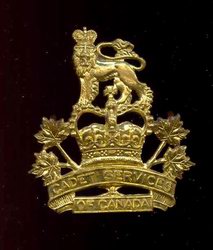
It reappeared on 1 June 1924 as the Cadet Services of Canada; it was a
component of the Canadian Army and the forerunner of the current Cadet
Instructor Cadre. This arrangement between the Federal Government and
local school boards contributed significantly to the development of
physical education programs in Canadian schools.
Strathcona Trust
In 1910, Sir Donald Alexander Smith—Lord Strathcona—the Canadian
High Commissioner to Britain, deposited in trust with the Dominion
Government the sum of $500,000, bearing annual interest of 4%, to
develop citizenship and patriotism in cadets through physical training,
rifle shooting, and military drill. He is remembered today with the
Strathcona Medal.
The World Wars
Forty thousand former army cadets and several thousand former sea cadets
served in His Majesty's forces during World War One. By the end of the
war there were 64,000 boys enrolled in Army Cadet corps across Canada.
The Navy League authorized the creation of Girls Naval Brigades as early
as World War One. The girls benefited from a training program providing,
as much as possible, a parallel training to that of the boys.
During the twenty years following World War One, cadet training came to
a standstill. Many corps survived these hard times, but the Depression
and the lack of public interest caused the cancellation of the uniform
grant for Army Cadets in 1931 and the instructional grant for 12 and 13
year olds in 1934. In Alberta, only a couple of corps functioned beyond
1934. This was clearly some of the darkest days for cadet corps.
The beginning of World War Two brought a renewed public interest in
cadet training. An astounding amount of cadet corps were formed in
high schools across the country. During the
war, the Royal Canadian Navy began its partnership with the Navy League
in sponsoring Sea Cadets and their officers were taken on the payroll to
the Royal Canadian Navy.
The Air Cadet League of Canada was formed in 1940, and raised its first
squadrons in 1941. The first air cadet unit was #1601 Air Force Cadet Corps
formed in Vancouver on April 13, 1939. It stands alone as being the only
air cadet unit formed within the army cadet system, the corps was
transferred to the new Air Cadet League in 1943. From the outset, the
Air Cadet League enjoyed a partnership with the Royal Canadian Air
Force, which enrolled Air Cadet instructors as commissioned officers. By
the end of World War Two, they had raised 374 squadrons with an
enrolment of 29,000 Air Cadets.
During and after World War Two, you could find a cadet corps that
paraded a female platoon or company. But these unofficial female cadets
could never lawfully be trained, kitted, fed or transported and were not
allowed to attend summer camp. Despite that, the girls proudly wore
their uniform and trained as best as they could primarily in school
corps.
The Post-War Years
In recognition of the significant contribution of former cadets to the
war effort, His Majesty King George VI conferred the title royal to the
cadet program, creating the Royal Canadian Sea Cadets, the Royal
Canadian Army Cadets, and the Royal Canadian Air Cadets. It is estimated
that nearly 230,000 former sea, army and air cadets served in His
Majesty's forces during World War Two.
After World War Two, quotas were imposed reducing Canada's total cadet
force to about 75,000 members. Many of the closed corps, those with
membership restricted to boys in one particular school, were disbanded;
some of them became open corps, training in militia armouries or in
Legion halls; others, like many corps sponsored by the Navy League,
acquired their own buildings.
The Korean War stimulated growth among open corps in the early 1950s.
Many school corps moved to armouries and drill halls. After 1954, Korea veterans staffed the Area Cadet Offices that began to
manage these corps and the summer camps that trained them.
Unification of the Canadian Forces
Following the unification of the Canadian Forces in 1968, a number of
changes occurred in the Cadet world:
* Sea and Air Cadets came more fully under the control of the Canadian
Forces in order to standardize the three Cadet organizations;
* A directorate of cadets was established in Ottawa to set policy and
co-ordinate the activities of the Sea, Army and Air cadets;
* The Army Cadet League of Canada was formed in 1971 in order to give
the Army cadets a civilian voice comparable to that of the Navy League
and the Air Cadet League;
* Sea Cadet officers became commissioned members of the Canadian Forces.
Before this date, sea cadet officers were created by means of a warrant
from the Navy League of Canada; and
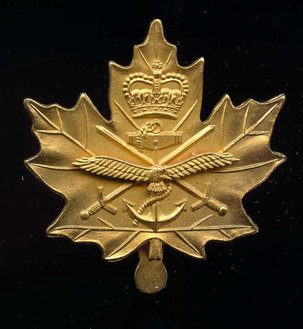
* The Cadet Services of Canada was superseded by the Cadet Instructor
List, which was later redesignated the Cadet Instructor Cadre.
Girls in the Cadet Program
Girls have participated unofficially in cadet training almost from the
beginning. Shortly after the Highland Cadet Corps was stood up at the
Guelph Grammar School in 1882, a female cadet company called the
Daughters of the Regiment, was also raised.
On the 30 July 1975, parliament amended the relevant legislation by
changing the word boys to persons, therefore permitting girls to become
members of the Royal Canadian Sea, Army, and Air Cadets. At long last,
girls could finally do everything the boys had been doing for so many
years. The biggest change was at the camp level. What had been for so
many decades an exclusively male environment changed dramatically at
Vernon, Ipperwash, Valcartier, Argonaut and Banff. In short time the
girls adapted.
2004 - 125th Anniversary
2004
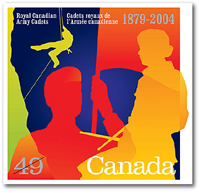
marked the 125th anniversary of the Royal Canadian Army Cadets. The Army
Cadet League of Canada purchased and issued a 125th Anniversary pin to
be worn by all 25,000+ army cadets across the country. Canada
Post honoured the cadets with a stamp of it's own unveiled in Ottawa in
March 2004. Many parade honouring the century and a quarter of
cadets occurred across Canada, there were Freedom of the City parades in
Vernon, Oromocto and Calgary as well as other locations. The original
Royal Banner was laid up in Vernon during the final battalion parade on
August 19 at the ACSTC, and the new Royal Banner was paraded in front of
1500 cadets and 2000 members of the audience.
We hope you will have many hours of
enjoyment from the information through out this extensive web site.